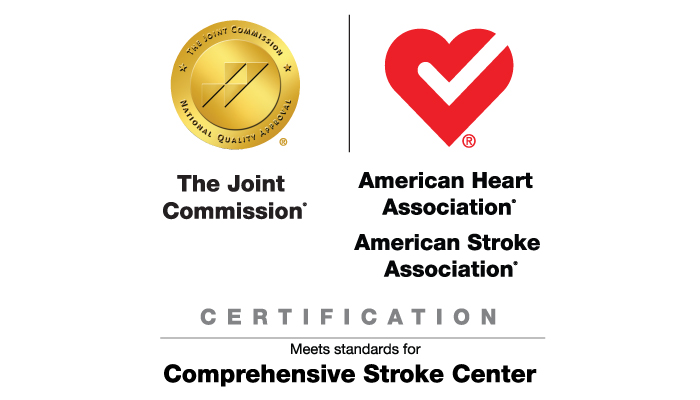
Brigham and Women's Hospital is a certified Comprehensive Stroke Center (CSC), a designation granted to a select number of centers in the United States with the specific ability to treat the most complex stroke cases.
Each year, stroke impacts approximately 750,000 to 800,000 individuals in the United States, taking a tremendous toll on patients, their families, and society in general. Stroke is a leading cause of death and disability. Many stroke survivors are left with significant speech, motor, and memory difficulties, but these can be minimized with early identification and treatment of stroke.
Stroke is a life-threatening emergency, and the greatest chance for recovery from stroke occurs when treatment is started immediately after the onset of symptoms. Newer stroke therapies offered at Brigham and Women’s Hospital, such as endovascular treatments or procedures, can rapidly reestablish blood flow, improving our ability to restore patients’ health.
Stroke Conditions and Disorders
Our stroke specialists treat a wide range of cerebrovascular diseases (disorders of the blood vessels of the head and neck), including:
- Stroke
- Brain Aneurysms
- Brain Tumors
- Arteriovenous Malformations (AVMs)
- Dural Arteriovenous Fistulas
Stroke Treatment Options
Using highly-detailed information from our Stroke Center’s advanced diagnostic capabilities, our multidisciplinary team of specialists to deliver the optimal treatment combinations for each patient, including medical, interventional, and surgical therapies.
Medical and Endovascular Treatment
Medical treatment options at our Stroke Center include:
- Intravenous thrombolysis with tPA.
- Intra-arterial thrombolysis with tPA and mechanical thrombolysis and clot retrieval.
- Identification and treatment of the underlying cause and associated risk factors as secondary prevention.
Neurosurgical Procedures
Our Center offers the following surgical treatments for stroke conditions and disorders:
- Simple and complex intracranial bypass procedures.
- Craniectomy and hemispheric decompression for stroke patients with a large area of brain affected.
- Carotid endarterectomy, skull base approaches to aneurysm clipping, and AVM resection to prevent stroke or stroke recurrence while minimizing disturbance of normal brain tissue.
- Stereotactic radiosurgery to treat AVMs inaccessible by other means.
- Endovascular surgery to treat intracranial aneurysms, AVMs, and extracranial and intracranial obstructions (angioplasty, stenting).
- Intraoperative arteriography is used during many surgical procedures to confirm successful treatment.
- Neuro-interventional Procedures
The state-of-the-art neuroradiology suite at Brigham and Women’s Hospital includes several procedure rooms dedicated to neuro-interventional procedures. The suite’s novel, flat plate angiographic scanner minimizes radiation exposure and while providing high quality, three-dimensional images that guide interventionalists, enabling them to perform advanced stroke treatment procedures more easily and safely. These procedures include:
- Urgent revascularization of acute arterial occlusions.
- Angioplasty and stenting of occlusive vascular lesions in the carotid arteries and intracranial blood vessels and coil embolization of cerebral aneurysms.
- Coiling of intracranial aneurysms, including a new detachable coil that encourages scar tissue formation during aneurysm healing.
- Microcatheter injection to fill malformations and decrease the risk of dangerous bleeding in patients with intracranial vascular malformations, including AVMs.
Neuroscience Intensive Care Unit
The Neuroscience Intensive Care Unit offers 24/7 monitoring, full-time neurocritical care specialists, and innovative treatment options designed to improve outcomes for stroke patients. With 20 hospital beds, it is among the largest of its kind in the country.
The Neuroscience ICU includes:
- Neurologists, neurosurgeons, and other specialists working as a team to provide care for patients with acute neurological conditions, such as ischemic stroke, subarachnoid and intracerebral hemorrhage, Guillain-Barré syndrome, myasthenia gravis, status epilepticus, and encephalitis.
- State-of-the-art equipment, including onsite CT imaging and intracranial monitoring.
- New intracranial tissue oxygenation monitors and microdialysis catheters to measure real-time cerebral biochemistry.
- Highly trained, specialized neuroscience nurses that carefully monitor each patient's recovery.
Comprehensive Stroke Center Certification
As a Comprehensive Stroke Center, Brigham and Women's meets extensive criteria and standards established by The Joint Commission and the American Heart Association/American Stroke Association, including:
- Acute Stroke Team and Program Medical Director with extensive stroke expertise, available 24/7 and available at bedside within 15 minutes.
- Diagnostic capabilities incorporating a wide range of imaging modalities and catheter angiography.
- Neuro Intensive Care Unit with dedicated beds for complex stroke patients, available 24/7.
- Neurosurgical Services including neurointerventionalist, neuroradiologist, neurologist, and neurosurgeon.
- Treatment Capabilities with IV thrombolytics, microsurgical neurovascular clipping of aneurysms, neuroendovascular coiling of aneurysms, stenting of carotid arteries, carotid endarterectomy, and endovascular therapy.
- Research with participation in patient-centered research that is approved by the Institutional Review Board (IRB).
Advanced Stroke Care at BWH
Brigham and Women’s Hospital also offers additional services to improve outcomes for stroke patients, including:
- National clinical trials investigating groundbreaking approaches to stroke management.
- Pre-arrival evaluation and treatment planning to accelerate treatment for patients transferred to BWH for advanced stroke care.
- Remote physician consultations through our Telestroke Center.
- Our neurologists and neurosurgeons work with a multidisciplinary team of providers trained in stroke care including PT, OT and speech therapy, pharmacy, laboratory and radiology staff.
- Monthly stroke support meetings, held at Brigham and Women’s Faulkner Hospital, to help stroke survivors, family members and caregivers cope with recovery after a stroke.
Stroke Quality Measure
View the Stroke Quality Measures that Brigham and Women's Hospital follows for adults who have had a stroke.