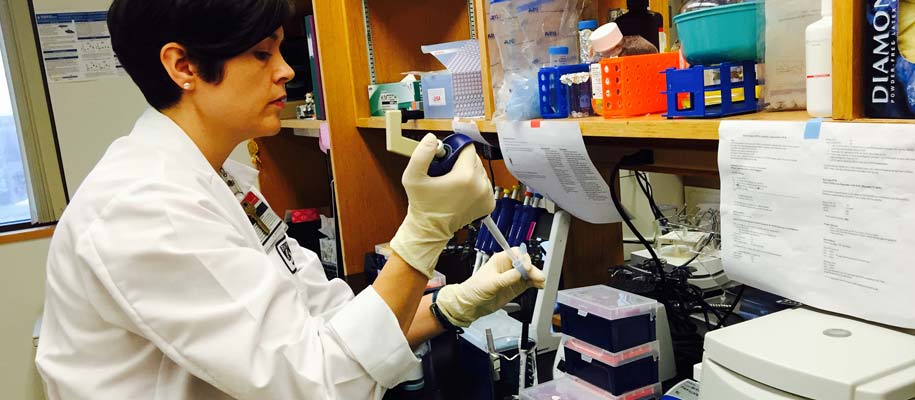
As a nurse in the Brigham and Women’s Hospital Neonatal Intensive Care Unit (NICU), Katherine Gregory, PhD, RN, now executive director for Women’s and Newborn Health, became increasingly curious and concerned about a condition called necrotizing enterocolitis (NEC), a sometimes-fatal infectious disease of the gut in preterm infants. NEC can cause severe infection, ruptured bowel, malnutrition, prolonged hospitalization, and in some cases, death. Her time in the NICU inspired Gregory to launch a research project to examine NEC in search of a biomarker - a biological substance that indicates the presence of a disease or a pathogen. “The NICU team caring for preterm infants needed to be able to measure something that would give warning signs that the disease was inevitable so that they could be better prepared,” said Gregory.
In collaboration with a multidisciplinary research team, she successfully measured a biomarker for NEC called intestinal fatty acid binding protein (iFABP), a protein specific to intestinal inflammation and injury. The team found that elevated levels of iFABP appeared in urine within three and seven days before the onset of NEC symptoms. The research was published in The Journal of Pediatrics. The team hopes to build on this work by conducting a study that will explore various approaches to using markers of inflammatory disease in the clinical setting. “We have made progress towards understanding NEC,” said Gregory. “However, this disease remains a major contributor to morbidity and mortality for preterm infants, so we have more work to do, for babies cared for at the Brigham and around the globe.”