At Dana-Farber Brigham Cancer Center, we are the driving force in the next generation of cancer treatment. With our innovative adaptive radiation therapy, we combine leading-edge technology with artificial intelligence to deliver highly precise and personalized care to each of our patients.
Adaptive radiation therapy is a breakthrough in cancer care that adjusts treatment to meet your individual needs. Unlike traditional methods, which follow a fixed treatment plan, adaptive therapy uses a combination of artificial intelligence and real-time imaging to tailor each radiation dose according to the unique shape, size, and position of your tumor. This precise targeting helps to protect healthy tissues, leading to better outcomes.
Our system uses state-of-the-art cone beam CT (CBCT) technology to capture high-quality images quickly. These images allow us to deliver lower doses of radiation, reduce the time needed for imaging, and make immediate adjustments to your treatment.
Your journey with adaptive radiation therapy begins with a detailed CT scan performed in the treatment room. This scan provides precise information about the tumor's size, location, and surrounding healthy tissues. Using advanced AI algorithms, we analyze this data to create a personalized treatment plan just for you.
When it’s time for your treatment, you’ll be comfortably positioned on the treatment table. The linear accelerator machine, which rotates around you, will deliver the radiation with pinpoint accuracy. Thanks to the integrated camera system and two-way intercom, you’ll be in constant contact with your radiation therapist throughout the process.
This advanced treatment may be an excellent option for various cancer types, but your eligibility will depend on factors such as the type and stage of your cancer, your overall health, and your treatment goals. Our multidisciplinary team of specialists will carefully assess your case to recommend the best treatment plan for you.
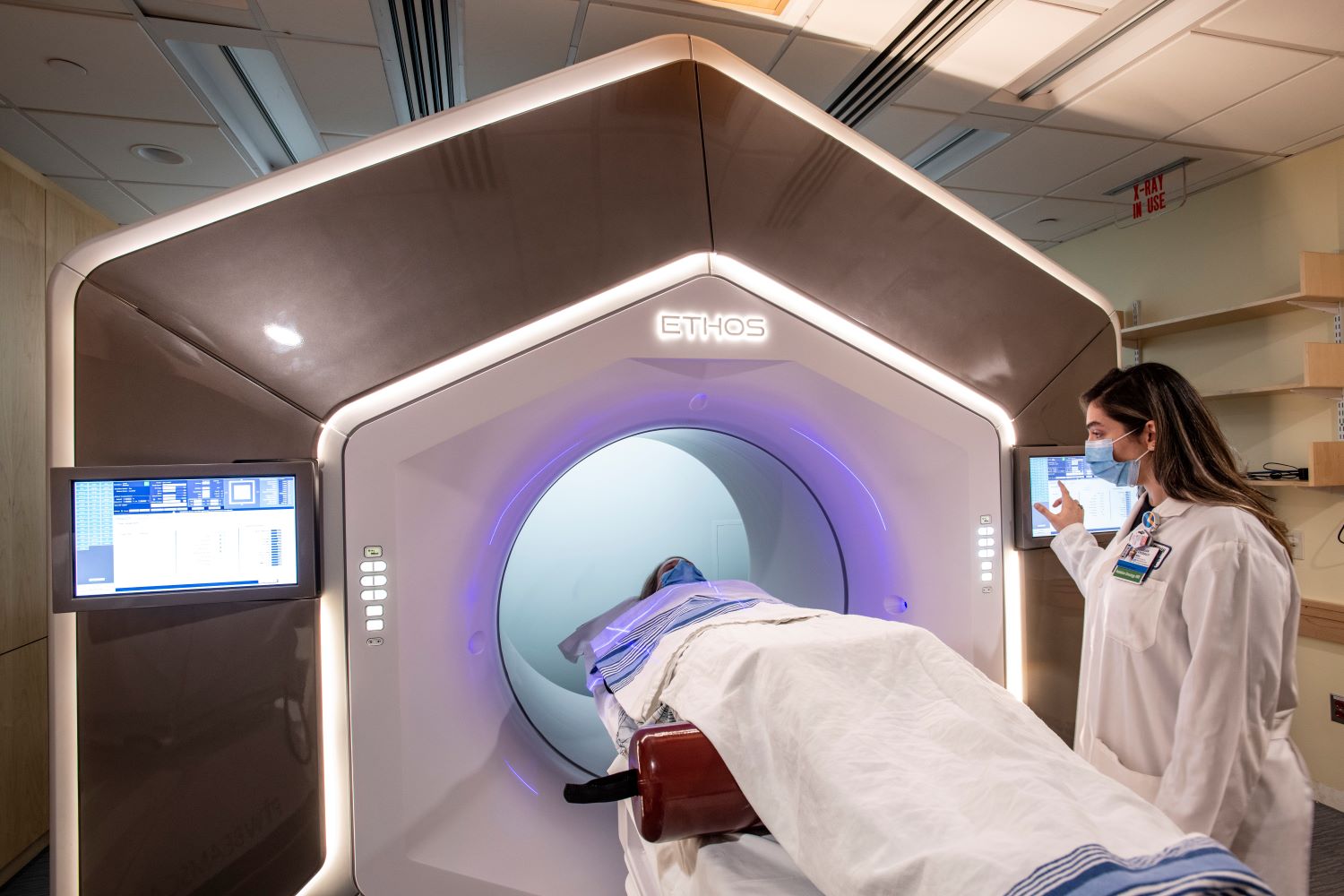
Radiation Oncology treatment at Brigham and Women’s Hospital.
For over a century, a leader in patient care, medical education and research, with expertise in virtually every specialty of medicine and surgery.
About BWH