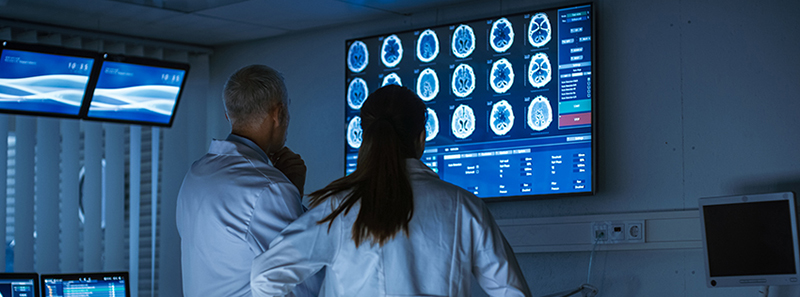
We are at an exciting time for research into Alzheimer’s and other brain disease. Years of effort have finally led to the development of disease-modifying drugs that can help slow the progression of Alzheimer’s disease and alleviate its debilitating symptoms.
Yet, enormous scientific discovery is needed to advance new and better treatments. The Brain Donation Hub is at the forefront of these breakthroughs, driving advancements that change lives.
With the generosity of donors and their families, The Brain Donation Hub supports talented neuroscientists by providing access to brain tissue -- an essential research tool. This invaluable resource enables research into underlying brain mechanisms and fuels breakthroughs in detection, treatment, prevention, and cures.

The Brain Donation Hub donors and their families are often motivated by personal experiences, such as having a close relative affected by a devastating brain disease. Brain donation decisions are typically based on:
We also encourage healthy individuals to consider brain donations. Comparing healthy brains with diseased ones is important for understanding disease progression.
Planning in advance for a brain donation is helpful as it facilitates smooth coordination and avoids adding potential stress during a loved one’s passing. The enrollment process generally is as follows:
Brain donation does not alter your loved one’s appearance. Your family can still choose to have an open casket viewing if you wish. There is no cost for the brain autopsy, as long as the donor was a patient at Mass General Brigham. However, the family may be responsible for pay for transportation costs and brain removal if the autopsy is performed elsewhere.
Brain tissue is invaluable. We are grateful for every patient and family that considers enrolling a loved one in The Brain Donation Hub.
To learn more, please reach out to your physician or email us.

Director, The Brain Donation Hub
Assistant Professor of Pathology, Harvard Medical School
Principal Investigator and Neuropathologist, Brigham and Women’s Hospital
See Entire Profile See Entire Profile
Vincent and Stella Coates Professor of Neurologic Diseases, Harvard Medical School
Co-Director, Ann Romney Center for Neurologic Diseases
See Entire Profile See Entire Profile
Assistant Professor of Neurology, Harvard Medical School
Associate Neurologist, Cognitive and Behavioral Neurology, Brigham and Women’s Hospital
See Entire Profile See Entire Profile
Clinical Research Coordinator
Clinical Research Coordinator
For over a century, a leader in patient care, medical education and research, with expertise in virtually every specialty of medicine and surgery.
About BWH